Painful Gout and Its Causes

Gout is a form of inflammatory arthritis caused by a buildup of uric acid in the body, leading to crystal formation in the joints. This condition most commonly affects the big toe, but can also affect other parts of the feet and ankles. Gout often begins suddenly with intense pain, redness, warmth, and swelling. The joint may appear shiny and feel extremely tender, making even light pressure from bedding uncomfortable. Flare-ups can come on quickly, often at night, and may limit walking or standing. Contributing factors include diet, dehydration, certain medications, and underlying health conditions that affect how uric acid is processed. A podiatrist can recognize the signs of gout and may coordinate care to confirm the diagnosis. Treatment typically focuses on reducing inflammation and managing pain, along with long-term strategies to lower uric acid levels. Guidance may include lifestyle adjustments and preventive care to reduce future flare-ups. If you suspect you have gout, it is suggested that you make an appointment with a podiatrist.

Gout is a painful condition that can be treated. If you are seeking treatment, contact one of our podiatrists from Associates in Podiatry, PC. Our doctors will treat your foot and ankle needs.

What Is Gout?

Gout is a form of arthritis that is characterized by sudden, severe attacks of pain, redness, and tenderness in the joints. The condition usually affects the joint at the base of the big toe. A gout attack can occur at any random time, such as the middle of the night while you are asleep.

Symptoms

  • Intense Joint Pain - Usually around the large joint of your big toe, and it most severe within the first four to twelve hours
  • Lingering Discomfort - Joint discomfort may last from a few days to a few weeks
  • Inflammation and Redness -Affected joints may become swollen, tender, warm and red
  • Limited Range of Motion - May experience a decrease in joint mobility

Risk Factors

  • Genetics - If family members have gout, you’re more likely to have it
  • Medications - Diuretic medications can raise uric acid levels
  • Gender/Age - Gout is more common in men until the age of 60. It is believed that estrogen protects women until that point
  • Diet - Eating red meat and shellfish increases your risk
  • Alcohol - Having more than two alcoholic drinks per day increases your risk
  • Obesity - Obese people are at a higher risk for gout

Prior to visiting your podiatrist to receive treatment for gout, there are a few things you should do beforehand. If you have gout you should write down your symptoms--including when they started and how often you experience them, important medical information you may have, and any questions you may have. Writing down these three things will help your podiatrist in assessing your specific situation so that he or she may provide the best route of treatment for you.

If you have any questions, please feel free to contact our offices located in Pittsburgh-South Hills, and Pittsburgh-Bellevue, PA . We offer the newest diagnostic and treatment technologies for all your foot care needs.

Read more about Everything You Need to Know About Gout

Causes of Recurrent Ankle Sprains

Recurrent ankle sprains occur when the ankle repeatedly twists or rolls. This is often due to weakened ligaments that did not fully heal after a previous injury. This can develop from inadequate rehabilitation, poor balance, or returning to activity too quickly. Symptoms include ongoing pain, swelling, instability, and a frequent feeling that the ankle may give way. Risk factors include participation in sports, uneven surfaces, improper footwear, and reduced strength or coordination. A podiatrist can evaluate ankle stability, assess gait, and recommend treatment. Options include bracing, custom orthotics, and strengthening exercises to restore support and function. Early care is essential to prevent further damage and long-term complications. If you have difficulty with ankle sprains, it is suggested that you consult a podiatrist who can offer effective treatment and rehabilitation tips.

Ankle sprains are common but need immediate attention. If you need your feet checked, contact one of our podiatrists from Associates in Podiatry, PC. Our doctors can provide the care you need to keep you pain-free and on your feet.

How Does an Ankle Sprain Occur?

Ankle sprains take place when the ligaments in your ankle are torn or stretched beyond their limits. There are multiple ways that the ankle can become injured, including twisting or rolling over onto your ankle, putting undue stress on it, or causing trauma to the ankle itself.

What Are the Symptoms?

  • Mild to moderate bruising
  • Limited mobility
  • Swelling
  • Discoloration of the skin (depending on severity)

Preventing a Sprain

  • Wearing appropriate shoes for the occasion
  • Stretching before exercises and sports
  • Knowing your limits

Treatment of a Sprain

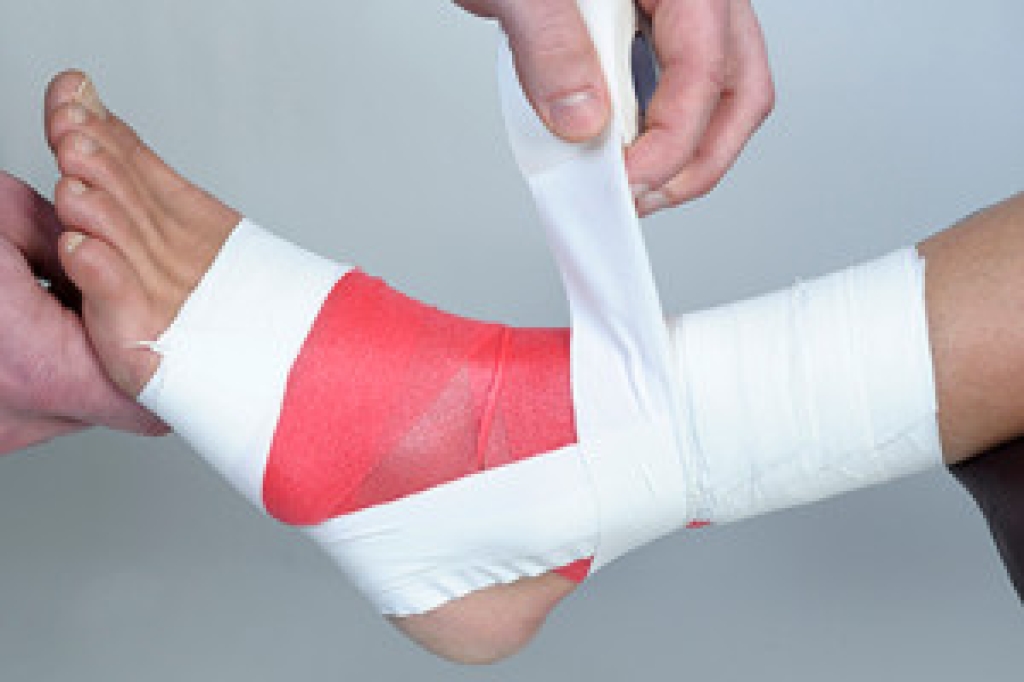
Treatment of a sprain depends on the severity.  Many times, people are told to rest and remain off their feet completely, while others are given an air cast. If the sprain is very severe, surgery may be required.

If you have suffered an ankle sprain previously, you may want to consider additional support such as a brace and regular exercises to strengthen the ankle.

If you have any questions please feel free to contact our offices located in Pittsburgh-South Hills, and Pittsburgh-Bellevue, PA . We offer the newest diagnostic tools and technology to treat your foot and ankle needs.
Read more about Ankle Sprains

Understanding Foot Structure

The foot is a complex structure made up of bones, ligaments, and joints that work together to support movement and balance. The bones are divided into three main groups. The tarsus forms the rear portion of the foot and includes bones that help absorb shock and provide stability. The metatarsus makes up the midfoot and plays a key role in weight distribution and arch support. Additionally, the phalanges are the toes, which assist with balance and push off during walking, running, and jumping. Ligaments connect these bones and provide essential support to maintain proper alignment. Healthy joints allow smooth and coordinated movement. A podiatrist can help by evaluating foot mechanics and addressing issues. If you have foot or ankle pain, it is suggested that you consult a podiatrist who can determine the cause and offer appropriate treatment solutions. 

If you have any concerns about your feet, contact one of our podiatrists from Associates in Podiatry, PC. Our doctors can provide the care you need to keep you pain-free and on your feet.

Biomechanics in Podiatry

Podiatric biomechanics is a particular sector of specialty podiatry with licensed practitioners who are trained to diagnose and treat conditions affecting the foot, ankle and lower leg. Biomechanics deals with the forces that act against the body, causing an interference with the biological structures. It focuses on the movement of the ankle, the foot and the forces that interact with them.

A History of Biomechanics

  • Biomechanics dates back to the BC era in Egypt where evidence of professional foot care has been recorded.
  • In 1974, biomechanics gained a higher profile from the studies of Merton Root, who claimed that by changing or controlling the forces between the ankle and the foot, corrections or conditions could be implemented to gain strength and coordination in the area.

Modern technological improvements are based on past theories and therapeutic processes that provide a better understanding of podiatric concepts for biomechanics. Computers can provide accurate information about the forces and patterns of the feet and lower legs.

Understanding biomechanics of the feet can help improve and eliminate pain, stopping further stress to the foot.

If you have any questions please feel free to contact our offices located in Pittsburgh-South Hills, and Pittsburgh-Bellevue, PA . We offer the newest diagnostic and treatment technologies for all your foot and ankle needs.

Read more about Biomechanics in Podiatry

How Injury Patterns Differ Between Men and Women in Sports

Foot and ankle injuries are common in athletes, but they do not occur the same way in men and women. Differences in anatomy, muscle strength, joint flexibility, and movement patterns can influence how stress is placed on the lower extremities. For example, women may be more prone to certain ligament strains due to joint laxity and alignment, while men may experience more high-impact injuries related to force and speed. Foot structure, footwear choices, and training habits also play a role in how injuries develop. Recognizing these differences allows for more personalized prevention strategies, including strengthening, balance training, and proper support. Early evaluation of pain or instability can help prevent minor issues from becoming more serious conditions. Whether you are a competitive athlete or staying active for health, understanding your individual risk matters. If you experience ongoing foot or ankle discomfort, it is suggested that you see a podiatrist for a proper diagnosis and appropriate treatment.

Ankle and foot injuries are common among athletes and in many sports. They can be caused by several problems and may be potentially serious. If you are feeling pain or think you were injured in a sporting event or when exercising, consult with one of our podiatrists from Associates in Podiatry, PC. Our doctors will assess your condition and provide you with quality foot and ankle treatment.

Common Injuries

The most common injuries that occur in sporting activities include:

  • Achilles Tendonitis
  • Achilles Tendon Rupture
  • Ankle Sprains
  • Broken Foot
  • Plantar Fasciitis
  • Stress Fractures
  • Turf Toe

Symptoms

Symptoms vary depending upon the injury and in some cases, there may be no symptoms at all. However, in most cases, some form of symptom is experienced. Pain, aching, burning, bruising, tenderness, tightness or stiffness, sensation loss, difficulty moving, and swelling are the most common symptoms.

Treatment

Just as symptoms vary depending upon the injury, so do treatment options. A common treatment method is known as the RICE method. This method involves rest, applying ice, compression and elevating the afflicted foot or ankle. If the injury appears to be more serious, surgery might be required, such as arthroscopic or reconstructive surgery. Lastly, rehabilitation or therapy might be needed to gain full functionality in the afflicted area. Any discomfort experienced by an athlete must be evaluated by a licensed, reputable medical professional.  

If you have any questions please contact our offices located in Pittsburgh-South Hills, and Pittsburgh-Bellevue, PA . We offer the newest diagnostic and treatment technologies for all your foot and ankle needs.

Read more about Sports Related Foot and Ankle Injuries

Why Live with Pain and Numbness in Your Feet?

Suffering from this type of pain? You may have the foot condition known as Morton's neuroma. Morton's neuroma may develop as a result of ill-fitting footwear and existing foot deformities. We can help.

Connect With Us